Remote Work Loneliness: Building Lasting Connections
Discover sustainable strategies to combat remote work loneliness and foster meaningful, lasting connections while working in a virtual environment.

.png)
.avif)
As remote work continues to evolve, one challenge stands out: loneliness. While only 34% of remote employees in the U.S. say feeling isolated is the biggest downside of remote work, staying socially connected remains important for everyone. Whether or not you personally feel isolated, knowing the signs of disconnection—like withdrawn colleagues or dips in team engagement—can help you support others and maintain a healthy work culture.
Remote workers can protect their well-being by staying proactive. Reach out to teammates, build time for casual conversations, and be prepared for occasional “off” days.
Most remote workers say the flexible setup improves their overall quality of life. From skipping the commute to customizing your workspace, remote work can be both productive and joyful when you stay connected and intentional.
However, remote work loneliness refers to the emotional disconnect that can arise when daily human interaction is reduced or removed entirely. After the pandemic normalized long-term remote work, this issue became more widespread and impactful, especially among those who thrive on in-person engagement or collaborative energy.
This article is for remote workers and team leads alike. Inside, you'll find firsthand stories, research-backed impacts, and practical strategies to improve mental health and well-being. Whether you're navigating feelings of loneliness or helping others feel more connected, these insights aim to build stronger, more supportive remote environments where everyone can thrive.

Why remote work can fuel loneliness
Remote work offers flexibility, autonomy, and freedom from long commutes—but it also lacks many of the spontaneous moments that foster connection in a traditional work environment. Office workers often engage in casual hallway chats, impromptu brainstorming, and watercooler conversations that build camaraderie and break up the workday. In contrast, remote workers often find themselves with fewer opportunities for informal social interaction.
Without in-person cues and shared workspace rituals, feelings of isolation can creep in unnoticed. The daily routine lacks the small but meaningful social check-ins that help create a sense of belonging and team unity. This can lead to disconnection, reduced morale, and emotional fatigue.
That said, not everyone finds remote work isolating. For some—especially introverts, highly analytical thinkers, or task-driven professionals—the lack of constant social interaction is actually a benefit. They may feel more focused without office chatter, politics, or frequent interruptions. For these individuals, working alone can be energizing rather than lonely. But even for those who prefer quiet, it's still important to watch for signs of disconnection or emotional fatigue over time.
Is this you?
- Fewer opportunities to socialize. You miss casual team lunches or chatting with coworkers during a break.
- Lack of camaraderie. Your workday feels productive but emotionally flat, with little team energy.
- Feeling emotionally detached. At times, you feel like just a name on a screen during meetings.
- Working in silence. You sometimes go long stretches without nonwork conversations or phone calls.
- Avoiding small talk. Even informal Slack messages can feel like too much effort.
- Blurring boundaries. Your workspace and home life blend together, making it harder to decompress.
These are common signs of remote work loneliness. Recognizing them is the first step toward addressing them. The good news is that there are plenty of small, proven ways to bring connection back into the remote workday.
The business impact of workplace loneliness
Loneliness can quietly erode team productivity, engagement, and overall performance. For remote employees, feelings of disconnection and lack of a strong sense of belonging can increase burnout and decrease job satisfaction. According to Gartner, when employees are lonely, their engagement drops and their outcomes suffer.
Here’s how loneliness can impact the business:
- Reduced productivity. Chronic loneliness can affect motivation, focus, and follow-through, ultimately impacting work output.
- More absenteeism. Without casual in-person check-ins, chronic disconnection can lead to emotional fatigue, reduced resilience, and burnout, raising the risk of absenteeism, lower quality work, and higher turnover.
- Lower retention and high turnover. A lack of workplace connection can make even high-performing employees feel unfulfilled or disengaged, which can reduce retention, increase turnover, and drive up hiring and onboarding costs.
- Weaker collaboration and innovation. When people don’t feel like part of the group, collaboration, innovation, and mutual support can break down.
To improve well-being and retention, leaders must prioritize connection—even in a distributed work environment.

How remote work loneliness can impact the team
Remote jobs offer flexibility, but they can also isolate people from the emotional support and structure that in-person roles often provide. Over time, reduced social contact and limited access to real-time feedback or encouragement can affect mental health and work-life balance.
Here’s how feelings of isolation are taking a toll among some workers:
- Increased anxiety. Without regular feedback or casual reassurance, remote workers may second-guess their performance or feel unsure about job stability—especially in environments where communication is inconsistent.
- Depressive symptoms. Limited social contact and lack of casual interaction can leave workers feeling isolated or emotionally flat, which over time may lead to persistent low mood, hopelessness, or a drop in motivation.
- Chronic stress. When work and personal time blur, it becomes harder to unplug. Overworking without breaks or boundaries can cause emotional exhaustion, irritability, and eventually, burnout.
- Declining well-being. Remote workers without a reliable support system may start to feel disconnected from their teams and roles. That emotional distance can erode a sense of purpose and reduce engagement with work.
- More health care needs. Prolonged isolation and reduced physical activity—common in remote settings—can increase risks for both mental and physical health issues, from depression and anxiety to poor posture and chronic fatigue, leading to greater demand for health support.
Supporting mental health in remote jobs is essential for building a sustainable, resilient workforce. It’s key to staying motivated, avoiding burnout, and making remote work a sustainable, rewarding experience.
Sustainable strategies to combat loneliness
You have all the tools you need to create stronger connections—starting with small but deliberate choices.
Combating loneliness in a remote work environment requires more than casual Slack messages or quick check-ins. It takes intentional habits, thoughtful team culture, and the right tools to foster real social connection. These strategies are designed to help both individuals and organizations create a more emotionally sustainable approach to remote work.
For individuals
Remote workers who are feeling lonely can take small, daily steps to feel more socially connected and maintain a healthier work-life balance. These strategies blend productivity with human connection, helping you feel less isolated during the workday.
- Stick to a routine. Start and end your workday consistently to maintain structure and avoid work-life blur. Of course, setting a routine is often easier said than done. Use tools like Slack or Google Calendar to block off working hours, and silence notifications after hours to signal when it’s time to shift gears.
- Schedule social breaks. Use short phone calls, walks with a friend, or casual check-ins over Zoom to stay connected throughout the day. Try adding one or two recurring “connection breaks” to your calendar—even five minutes can be enough to reset your energy and mood.
- Use digital coworking tools. Platforms like Focusmate create accountability and reduce the sense of working alone. Even just seeing another person on your screen, quietly working toward their own goals, can recreate the structure and motivation of a shared office space.
- Join online communities. Look for peer groups on LinkedIn or industry forums that support remote workers. Search by niche, interest, or profession, and don’t be afraid to engage—commenting on a post or joining a discussion thread can lead to meaningful new connections.
- Prioritize movement and self-care. Regular physical activity is one of the most effective ways to manage stress, boost mood, and reduce feelings of loneliness. Simple habits—like taking a walk during breaks or stretching between meetings—can improve both your mental and physical well-being.
Building social connection takes effort, whether you're a remote worker or managing a remote team—but it’s more doable than you might think. With just a few intentional habits and the right tools, staying connected remotely can become second nature. You can prevent or overcome remote work loneliness with these daily actions.
For instance, one Reddit user wrote about how much creating a simple morning routine before work helped them:
“There’s something about forcing yourself to look presentable each day, getting out of the house, and being around others. I definitely noticed an increase in my overall laziness and feeling depressed did seem to skyrocket [without that routine].”
Tip: Build a morning routine that includes leaving the house—even briefly—to reset your mindset.
Another post on Reddit shared a broader solution:
“Encouraging employees to get out of the house and interact with others within their own communities ... Not everyone wants to hang out with their colleagues, but [they] do want social interaction despite working remotely.”
Tip: Give team members flexibility—and permission—to connect in ways that feel natural. That could mean offering a few paid hours per month to attend local networking events, volunteer days, or casual team meetups. Not everyone wants to socialize with colleagues, but most people benefit from community interaction.
For teams and organizations
Team leads and HR professionals play a critical role in creating a culture of connection for remote teams. Prioritizing nonwork interactions, encouraging casual conversations, and regularly checking in with team members can go a long way in building camaraderie.
- Create virtual rituals. Coffee chats, game breaks, or theme days can strengthen bonds when they feel authentic, but only when handled thoughtfully. Keep them optional, varied, and low-pressure; rotate who hosts, invite input on activities, and frame them as a chance to connect, not perform.
- Use async conversation tools. Encourage informal threads in Slack or Microsoft Teams for nonwork banter.
- Check in with intent. Make space during one-on-ones or team meetings to ask about well-being, not just work-related goals. Try simple prompts like “How’s your week going?” or “What’s something that’s been energizing—or draining—you lately?” to open the door for real conversation.
- Promote flexible social options. Consider offering a few hours of paid time for team members to attend local networking events, conferences, or community service days, supporting social connections beyond traditional work interactions.
These efforts can improve morale, build trust, strengthen communication, and reduce disconnection across distributed teams.
Someone on Reddit offered this advice:
“It's important to have dedicated time to just shoot the breeze instead of [only having] small talk before a formal meeting begins.”
Tip: Start team calls with a few minutes of non-work conversation—but don’t stop there. Set up informal touchpoints like virtual coffee hours or a dedicated Slack channel where teammates can chat about pets, hobbies, or weekend plans. These spaces help recreate organic connections and can be started by anyone, not just managers.
Tech tools that help
The right tech stack can bridge the social gap for remote employees. These apps promote more meaningful messaging, reduce feelings of loneliness, and create a more connected digital workspace, whether through quick video calls or asynchronous interactions.
- Video conferencing tools like Zoom and Google Meet. Turn video calls into connection opportunities by mixing work and fun—try themed team meetings, virtual escape rooms, trivia contests, or guest speaker sessions to build camaraderie beyond daily tasks.
- Donut. A Slack plug-in that pairs team members for informal conversations to boost camaraderie. Use it to spark casual chats between teammates who might not normally interact, helping to build rapport across the team.
- Yac. Facilitates async voice messaging, making communication more personal without interrupting workflows. Send quick voice messages to share updates or encouragement in a more human, personal way than text alone.
- Tandem. A virtual office app that lets remote employees pop in and out of conversations, mimicking spontaneous desk chats. Join or start impromptu conversations that recreate the feel of spontaneous office interactions and reduce isolation.
Incorporating tools that balance productivity and social engagement can make remote work feel less isolating and more connected, inclusive, and human.
On Reddit, one user shared this insight:
“I've been trying to increase the number of in-person lunches [and] coffees to balance working remotely! With my team, we've also recently started using a virtual office to create a space for more informal conversations throughout the day and that's been awesome!”
Tip: Recreate organic connection moments with virtual coworking tools or informal Zoom hangouts.
Remote work doesn’t have to feel remote. These platforms can make your workday more connected, collaborative, and even fun.
Resources for remote workers
Whether you're working full -time from home or splitting time between locations, strong community support can make all the difference. These platforms and networks offer remote workers access to mental health resources, peer connection, and a sense of belonging—no matter where your workspace is.
- LinkedIn Groups. Join professional communities that align with your industry to expand your network and strengthen social connection. Search by keywords related to your role, skills, or interests, and look for active groups with recent posts and discussions.
- Mental Health America. Offers tools, screenings, and educational resources to support mental health and well-being for remote workers.
- Open Path Collective. Provides access to affordable therapy options for individuals seeking health care on a remote-friendly schedule.
- 7 Cups. A peer support platform offering free chat with trained listeners and wellness exercises.
These options help bridge the gap between remote work and emotional support, empowering remote workers to prioritize connection, well-being, and mental health.
Build a connection plan
Even small steps can make a big difference in how you feel during the workday. So, we created a simple, actionable 7-day anti-loneliness plan to help remote workers reconnect with others and reintroduce moments of social connection into daily life. Whether you're adjusting to remote work, navigating a quiet workspace, or just need to socialize more intentionally, this plan offers doable routines to help reduce feelings of loneliness.
The plan encourages remote workers, who often blend work and life in shared spaces, to find balance, build relationships, and feel more grounded throughout the workday.
Download the 7-Day Anti-Loneliness Plan here
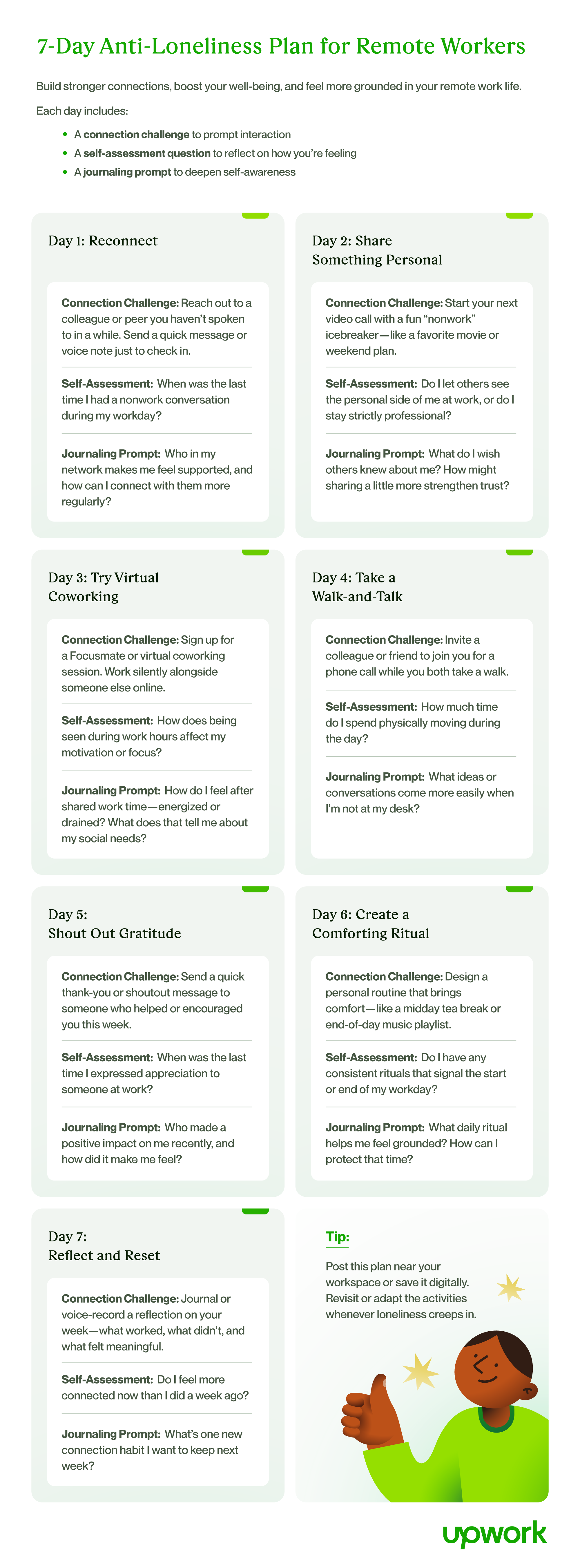
Take the first step toward connection
Remote work offers freedom, but that flexibility can come with hidden costs. If you’ve been feeling isolated, you’re not alone. Feelings of loneliness are common among remote workers, but with the right routines, community, and mindset, they’re also manageable.
You have all the tools you need to prevent remote work loneliness from creeping in. Small daily actions and checking in with team members or peers can strengthen workplace well-being and improve long-term job satisfaction. Start by downloading the action plan.
Then take the next step—sign up for Upwork to embrace the flexibility, autonomy, and career growth that remote work can offer. Use the tips in this article to stay connected and supported as you build a freelance life that works for you.

.avif)

Author Spotlight

Upwork is the world’s largest human and AI-powered work marketplace that connects businesses with independent talent from across the globe. We serve everyone from one-person startups to large organizations with a powerful, trust-driven platform that enables companies and talent to work together in new ways that unlock their potential.