How To Take a Vacation as a Freelancer: 7 Tips for Time Off
These 7 tips show freelancers how to afford the money and time to take a vacation, keep the business running while you’re gone, and return with less stress.

.png)
.avif)
As a freelancer, taking a vacation is more than a luxury—it’s essential for avoiding burnout, just like for any traditional employee.
Stepping away, whether it’s for a few days or a couple of weeks, can boost your work quality, health, and personal relationships. By giving yourself time to recharge and reset, you can come back to work feeling more focused and creative, and better able to tackle projects with fresh energy. Plus, taking time off is key to that work-life balance you probably went freelance to achieve in the first place, right?
Of course there’s a catch: freelancers don’t get paid time off. And if you’re juggling multiple clients, you may feel you should be available whenever they call.
But it’s possible to step away without leaving your clients hanging or taking a big hit to your income. Here’s how.
1. Plan ahead for uninterrupted time off
A little planning and communication up front can make a world of difference when you’re figuring out how to enjoy a truly stress-free vacation as a freelancer.
- Block out vacation dates early. Mark off dates as soon as you know you’ll be away so you avoid overcommitting or scrambling to meet deadlines right before you leave. If possible, set these dates at the beginning of the year or quarter so you can plan around them.
- Give yourself a buffer. Set internal project deadlines a few days before the actual due dates. These soft deadlines give you a cushion to handle any last-minute surprises so you can be sightseeing instead of working.
- Review deadlines. If a deadline falls during your time off, reach out to clients to see if it can be extended to when you’re back—unless it’s something you can easily wrap up beforehand.
- Notify clients weeks in advance. Giving clients plenty of notice shows respect for their schedules and allows them to adjust deadlines or request any early deliverables. A few weeks before you leave, send them a quick email with your vacation dates. Then, send a friendly reminder a few days before your departure to keep everyone on the same page.
2. Set clear boundaries
Burnout can cut short even the most promising freelance careers, so protect yours by fully unplugging when you take time off. Setting clear expectations with clients reassures them that their needs are covered, allowing you to truly relax and recharge.
- Commit to really being offline. Let clients know how they can reach you in case of a true emergency, but kindly set the boundary that you’re on vacation. Politely clarify what qualifies as an “emergency” to prevent non-urgent interruptions.
- Be specific. State the dates you’ll be away and provide an alternate contact if possible. If there isn’t an emergency contact, let clients know that you’ll check and respond to messages once you’re back.
3. Automate and outsource tasks
Taking time off as a freelancer can feel stressful when you’re responsible for every part of the business. Lighten the load by using technology and delegating where possible. Here are a few ways to manage regular tasks while you’re out and keep clients happy:
- Pre-schedule social media posts and regular content. Use tools like Hootsuite, Buffer, and Sprout Social to maintain your social media presence. And use your email or blogging platforms to schedule newsletters or blog posts ahead of time, so you can keep content consistent. If you’re running short on time, consider repurposing older, high-performing content or share “throwback” posts.
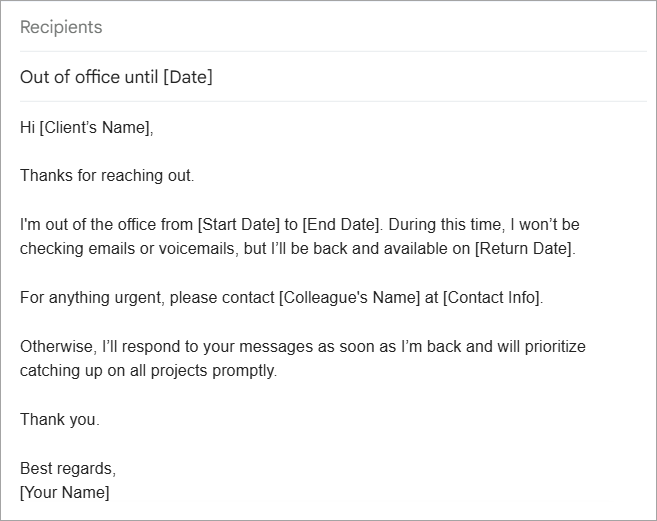
- Set an out-of-office message. Most email clients have an auto-reply feature like Gmail Vacation Responder and Outlook Automatic Replies. Keep your auto-response brief and polite.
Example:
- Automate email follow-ups and reminders. Use tools like Mailbutler, Rebump, and FollowUpThen to schedule follow-ups, manage your inbox, and keep project communication flowing. This helps ensure client touchpoints stay consistent even while you’re away.
- Hire a freelancer. Consider hiring help through freelancing platforms like Upwork—whether it’s a virtual assistant for admin tasks or a project manager to keep things moving. Document your most common processes in a quick how-to guide so they know what to do and who to contact with questions.
4. Manage finances to accommodate unpaid time off
Freelancers don’t get paid time off (PTO), so getting away—even just for a long weekend or staycation—might seem like too big of a hit on your budget. However, with a bit of financial planning, you can make time away doable. Here are some tips to help you build up your vacation fund:
- Treat your vacation fund like a business expense. Just like setting aside money for taxes or other costs, create a dedicated vacation fund. Estimate how much income you’ll need to cover your time off. For example, if you plan to take two weeks off and typically earn $1,000 per week, set a goal of saving $2,000 plus spending money.
- Automate your savings. Use tools like Chime, Qapital, or Acorns to automatically set aside a percentage of your income into savings. Some apps even round up your purchases, adding the spare change to your savings. Small, consistent contributions can really add up over time.
- Track seasonal dips. Review your earnings from the past year to spot slower months. If work tends to slow down every December, consider planning your vacation then. This aligns time off with natural income dips and lessens the financial impact. If possible, take on a bit of extra work in the month or two before your vacation to boost income and offset costs.
- Adjust your rates to account for paid time off. If you can raise your freelancer rates and still stay competitive, factor in vacation pay. Divide your target annual income by the number of weeks you’d like to work. For example, if you want four weeks off a year and you want to earn $52,000 a year, then you should increase your rates to bring in $1,083 per week ($52,000 / 48 weeks).
5. Use technology to your advantage
Keep your freelance business running while you’re away by using apps through your smartphone. Mobile apps aren’t only convenient, but you also avoid logging into a computer, which could make you feel like you’re still “on the clock.” These tools can keep you connected without feeling like you’re still at work:
- Communication apps. Use tools like Slack, Microsoft Teams, and Upwork Messages to quickly respond to client and team messages from your phone. Set “Do Not Disturb” hours to protect your downtime and get notifications only from high-priority contacts.
- Cloud-based document storage. Upload essential files on cloud services like Google Workspace, Microsoft 365, and Zoho Workplace, so you can access, share, or even edit documents directly from your phone or tablet if absolutely necessary.
- Digital signature apps. Through apps such as DocuSign, Adobe Sign, and PandaDoc, you can sign contracts or invoices right from your mobile device.
- Calendar and scheduling apps. Manage your schedule from your phone with apps like Calendly, Microsoft Bookings, and Doodle. Pre-block your availability so clients and team members can schedule time with you without having to exchange messages back and forth.
6. Create a pre-vacation checklist
A thorough checklist does more than smooth your transition from desk chair to beach chair—it ensures everything runs smoothly while you’re away. Consider adding these items so that your checklist covers all the bases:
- Notify clients. Set up an automated email series to notify clients about your time off a few weeks in advance, with a reminder a few days before you leave. Remember to activate your out-of-office autoresponder for any new emails that come in while you’re away.
- Wrap up projects and send updates. For projects that will extend beyond your vacation, send clients a project summary and confirm deadlines a few weeks before you go. This proactive communication ensures everyone is aligned and may even strengthen client relationships.
Example:

- Set up invoices and payments. Use invoicing software like QuickBooks, FreshBooks, or Wave to automatically send out invoices and payment reminders to clients. Schedule payments through your bank app or bookkeeping tool to avoid late fees and service interruptions.
- Confirm project expectations. For ongoing projects, give clients a status update and timelines a few days before you leave. This gives them time to adjust their plans as needed and feel confident that everything’s on track.
- Schedule social media posts and newsletters. Pre-schedule social media posts and newsletters to maintain your online presence. If you have someone providing project updates to clients while you’re away, create a simple template to keep messages consistent and on-brand.
- Delegate minor tasks. Consider hiring a freelance virtual assistant from platforms like Upwork, Fiverr, or Guru to handle customer service or admin tasks. This way, you won’t return to an overwhelming pile of to-dos.
- Create supporting docs. Create a quick how-to guide for your backup, and update project management tools like Trello, Asana, or Monday.com with relevant project notes, updates, and links to resources. Save all critical documents to the cloud for easy access by clients or team members.
7. Plan for re-entry before you leave
Being self-employed often means you’re the doer of everything. So taking time off may feel like it’s not worth the mountain of work you’ll face when you return. Here’s how you can set yourself up for a balanced transition back to work so you get important things done efficiently without feeling stressed:
- Plan a lighter workload. For your first couple of days back, reserve plenty of time to catch up on messages and priority tasks. Avoid scheduling too many meetings or jumping straight into heavy projects to ease back into your workflow.
- Create a catch-up checklist. Before leaving, make a list of key projects and clients to review upon your return. This checklist will help you focus on what’s important and ensure that no tasks slip through the cracks.
- Set aside time for reflection. Take an hour to think through any new ideas or strategic insights that came to mind while you were away. Even if you don’t pursue them, this reflection can spark fresh ideas or help you see situations from a new perspective.
Build up your vacation fund with Upwork
As a full-time freelancer, you’re your own boss. This means it’s up to you to decide when you need to honor your physical and mental health—whether that means taking a two-day getaway or a two-week vacation.
The catch is that freelancers don’t get paid time off—but that doesn’t mean you shouldn’t take a vacation now and then. Think of it as an investment in yourself and your business—a chance to recharge and reignite your creativity. With a little planning and open communication with clients, you can create the time and funds for a well-deserved break.
Upwork offers thousands of opportunities to build up your vacation fund. You can choose to work with everything from one-person startups to large, Fortune 100 enterprises—many are looking for someone with your skills. See what’s available—join Upwork today.
Upwork is not affiliated with and does not sponsor or endorse any of the tools or services discussed in this article. These tools and services are provided only as potential options, and each reader and company should take the time needed to adequately analyze and determine the tools or services that would best fit their specific needs and situation.

.avif)

Author Spotlight

Brenda Do is a direct-response copywriter who loves to create content that helps businesses engage their target audience—whether that’s through enticing packaging copy to a painstakingly researched thought leadership piece. Brenda is the author of "It's Okay Not to Know"—a book helping kids grow up confident and compassionate.

Latest articles